
Sinhala and Tamil New Year ෴ සිංහල දෙමළ අලුත් අවුරුද්ද
A much awaited time of the year in Sri Lanka, the “Aluth Avurudda", "Avurudu", "සිංහල දෙමළ අලුත් අවුරුද්ද" or "Puthandu” is celebrated in many households mainly Buddhist and Hindu as the sun moves from Pisces to Aries marking the end of the harvest season. With the pleasant call of the Koha (Asian Koel) which is heard throughout the Month of April to the numerous observances and traditions, the Sinhala and Tamil New Year is a well celebrated cultural festival that brings all Lankans together in many parts of the world.
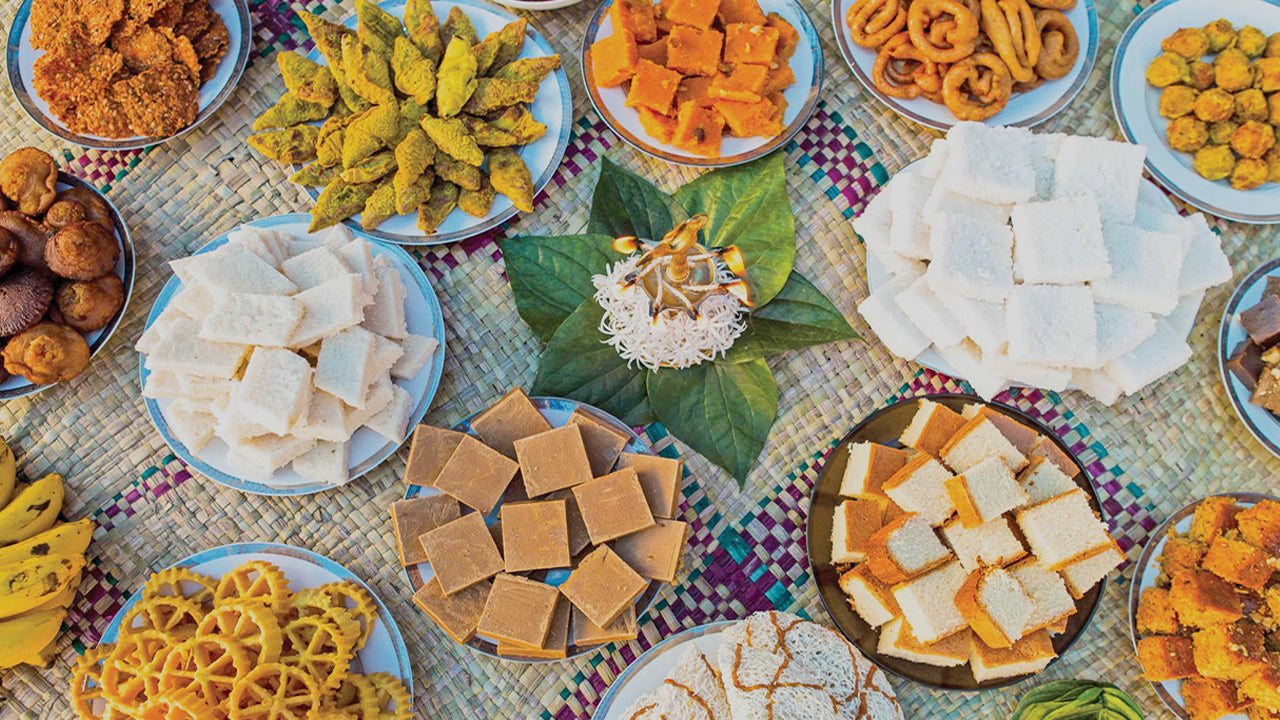
From a list of customs to deliciously mouthwatering sweetmeats and fun activities, this time of the year offers all Sri Lankans a chance to offer gratitude and celebrate as one family.
Nonagathaya
The time slot between the ending of the Old Year and the dawning of the New Year which is referred as the “Nonagathe or Nonagathaya” is a neutral time. According to Sinhalese beliefs, this time is used to observe and perform religious ceremonies. People are seen heading to their respective temples clad in white apparels which is always a pleasant sight. Buddhists are also encouraged to refrain from their day-to-day activities and seek blessings from their priests/monks.
Welcoming the New Year
Preparations for the New Year are done well in advance over here in Sri Lanka. From cleaning and repainting their households to buying new clothes for family members and preparing traditional sweetmeats, the chores are endless. The purchase of the new clay pot is also considered to be an important tradition. When the Auspicious time arrives, the New Year is welcomed with the lighting of the hearth and boiling of fresh milk in the newly purchased clay pot which is a symbol of prosperity. The spilling of the milk from all sides of the pot is considered to bring good luck for the entire family. The milk rice is prepared thereafter and the rest of the sweets are served among the family and then distributed among neighbours as well. This simple gesture symbolizes unity amongst all with no boundaries. Money and business transactions are carried out during this specified time seeking blessings for successfulness.
Other Traditions
The auspicious time is also when many commence their work with the determination to do better and reap more during the New Year. From farmers to school children, many are seen participating in their routine work. Another tradition which has been passed over centuries in Sri Lanka is paying homage to elders. A sheaf of betel leaves is presented to all elders in the family while the young ones seek their blessings for the future.
In between all these rituals, a special ceremony is held to anoint oil which is usually conducted by the oldest family member. This is practised in their respective temples as well where the prelate is seen carrying out the tradition which symbolizes good health. Auspicious times are provided in the “Palapala Litha” where there is also a time to leave for jobs. Many people head towards their home towns during the New Year Holidays and head back to their work places with the hope of doing better in the coming year.
Many villages, suburb localities and even hotels, resorts and guest houses celebrate these New Year Festivities in a simple or grand manner. Patrons organize fun filled activities which includes beating of drums and various fun games such as tug-of-war and pillow fighting etc., which brings so much joy to all who are gathered to take part and even to cheer. Meals are always served and people are seen enjoying these festivities, cast and creed aside.